

LiveStream

Views Navigation

Events Views Navigation

Today
  • Adventures in Crosswinds

    San Carlos Flight Center , Select a Country:

    This seminar will be held in person at SCFC, attendance is free and open to all. Web Members will still be able to access our seminars online, both live and recorded. Click here to learn more about the transition. Interested in watching more of our presentations? View our growing library of over 500 recorded safety

  • Small Plane, Big Airport – Flying into Bravo Airports

    San Carlos Flight Center , Select a Country:

    As a pilot, you probably learned at an airport centered around General Aviation, filled with small trainers and an occasional jet. Maybe you encountered a larger Class Charlie during your training, where you shared the taxiways with various business jets and airliners. However, many GA pilots shy away from Bravo and large international airports. At

  • Lessons Learned from a Career in the Sky

    Great aviators are shaped by the lessons they learn from others. Every flight brings new challenges, and the most experienced pilots have faced them time and again. By listening to their stories and insights, we can all grow into better, safer pilots. San Carlos Flight Center is proud to welcome retired Captain Bennett Taber, who

  • Landing Secrets Revealed

    San Carlos Flight Center , Select a Country:

    In some ways, learning to fly is largely about learning to land. Pilots of small planes need to perform at least one safe landing on nearly every flight. It's the type of skill that is learned once and then perfected for the rest of a pilot's life. How are your landings? Would you like to

  • Flying the Bay Tour

    San Carlos Flight Center , Select a Country:

    This seminar will be held in person at SCFC, attendance is free and open to all. Web Members will still be able to access our seminars online, both live and recorded. Click here to learn more about the transition.   Want to learn more about operations at local Bay Area Airports? Click here to watch

  • Jeppesen vs. FAA Instrument Plates

    San Carlos Flight Center , Select a Country:

    IFR pilots must have a thorough understanding of the charts they use. Pilots who have been flying IFR for years may be familiar with Jeppesen IFR Charts. Instrument students and newer IFR pilots may be more familiar with Aeronav, published by the FAA. Both of these providers of charts offer their own ways of relaying

  • Energy Management – A Different Approach to Flying

    San Carlos Flight Center , Select a Country:

      Pilots think differently than physicists.  Physicists approach flying the way they do other studies of mechanical motion, with an understanding of mass, speed, force, work, and energy.  Values and relationships accumulated over the years describe the interaction of bodies in motion, in a way that allows scientists and engineers to make predictions about their

  • Chief Pilot Tells All – How to Get a CFI Job

    San Carlos Flight Center , Select a Country:

    It seems like there are two groups of people who become flight instructors: pilots who love to share the art and skill of flying with new students, and pilots who love to share the art and skill of flying with new students while building hours toward a career in the airlines. If you’re a new

  • Investigating Aircraft Ownership at San Carlos Flight Center

    San Carlos Flight Center , Select a Country:

      Like many flying clubs, some members of San Carlos Flight Center have purchased a plane and added it to the Club's fleet. The decision may be tied to a number of factors: pride of ownership, a desire to get more involved in aviation, to learn even more about aircraft maintenance and upkeep, and for

  • Threat and Error Management

    San Carlos Flight Center , Select a Country:

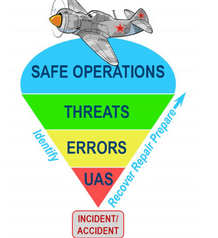
    Every flight presents its own unique challenges and risks. As pilots, our responsibility is to identify these threats and find ways to mitigate them. Threat and Error Management (TEM) is an overarching safety management approach that assumes pilots will naturally make mistakes and encounter risky situations during flight operations. This model, along with many others,