Guide for Parents of Younger Pilots
For some of us, aviation enters our lives as adults, when we have the time and resources to start chasing our dreams. But some people know from an early age that flying will become the focus of their lives. If you are a parent of a young person thinking of flying, here’s some things to think about.
How Young can a Person Start Flight Training?
A young person can begin flight training at any age, but the FAA has some specified age requirements at key milestones. They must be at least 16 to receive a Student Pilot certificate and to complete their first solo flight, which typically comes about half way through flight training. To complete training and become a Private Pilot, a student must be at least 17 years old on the day they take the final FAA Test (aka “checkride”)
In addition to those legal limits, there are some other considerations for parents.
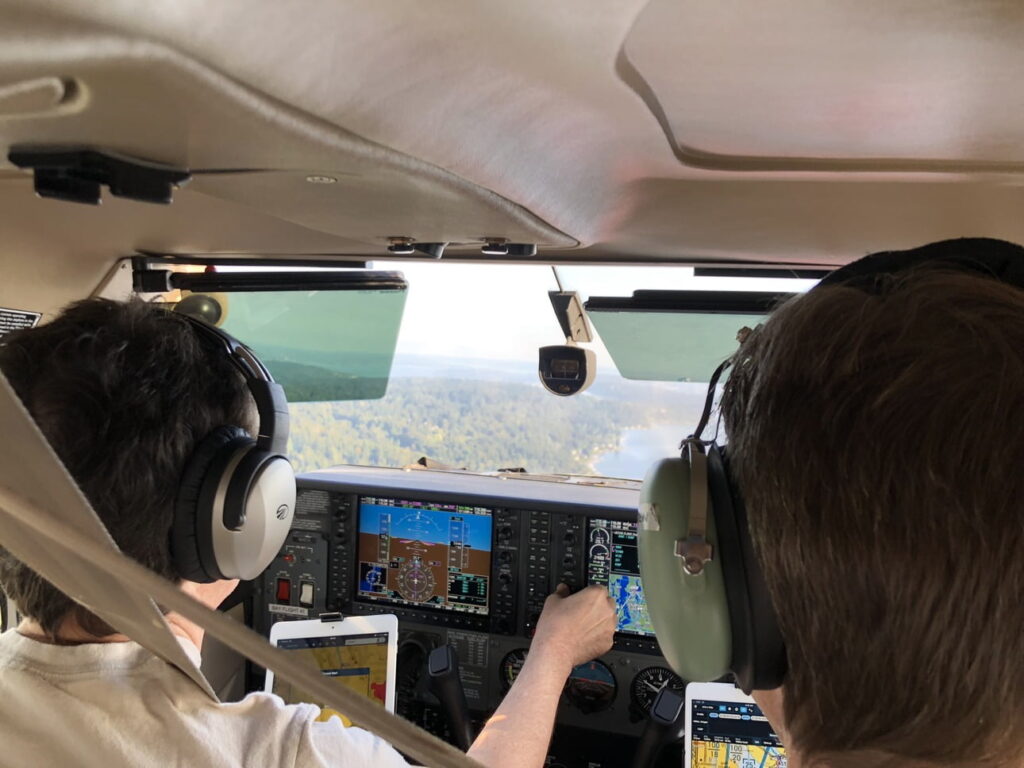
Student pilots must be physically large enough to operate the aircraft. This means their feet must reach the pedals, and their head and eyes must be able to see over the panel and out the front and side windows. We do have seat cushions for smaller pilots.
Mental Readiness - Task-Oriented Learning
Additionally, parents should understand that real flight training takes a mental readiness, and ability to do small tasks that seem boring or silly, but are essential for building up full control of the aircraft.
Most kids will find that it is fun to be in an airplane and operate the controls, but it takes a certain adult mental maturity to be ready for the goal oriented learning involved in pilot training, and that may just come down to physical advancement.
Holding altitude may seem a bit boring, but a mature student pilot will acknowledge it’s a necessary skill that is part of demonstrating mastery of the vehicle.
Younger students may not yet be able to make that association, and find advanced maneuvers too complicated or uninteresting.
If your son or daughter is younger than 15, but you still want to expose them to flight training, there’s nothing wrong with that. Our instructors can create a safe, fun, learning environment. We just want you to understand that adult-level knoweldge and skill acquisition may not be at full pace until they are 15 or so, and closer to the legal 16 and 17 year age limits.
Other Ways for Kids to Connect with Aviation
Parents may also consider helping young kids indulge a love for aviation outside of formal flight training. They could participate at the Hiller Museum’s aviation summer camps, or monthly EAA Young Eagles flights. San Carlos Airport has a Civil Air Patrol unit for young people. If young people are mature enough and able to get a work permit through their school, they might try for an after-school, weekend, or summer job washing airplanes or helping with airport events.
Advantages of Aviation Training for Young People
Private Pilot training can be a really good thing for young people. The training is structured with clear expectations for knowledge, skills, risk awareness, and decision making. It makes real-world use of math, chemistry, and physics. Pilots must learn to develop an overall safety focus, and learn to take responsibility for every decision they make, protecting themselves and others from injury.
The process can help a young person mature, and teach them that they can reach goals that others find difficult, or impossible.
Not every parent can support a young person’s dream of aviation. If you are able to, this can make a huge impact in your daughter’s or son’s life.
This is a lot to take in. If you have any more questions about the training process for your young person, stop by the Flight Center and talk with our Chief Pilot.